What comes after channeling?

Online, “channeling” never goes out of fashion — mostly as a way to “connect with the Universe.” At the same time the word itself is gathering the dust of the past, leading back to séances and mediums in an age of super-technology and an explosion of scientific progress. What is happening to a phenomenon that has taken part in the history of our civilisation for thousands of years, inspiring thinkers and changing the fate of nations?
We are confidently entering a period in which directive “truths” arouse ever more justified doubt and criticism in the civilised person, bringing to the foreground awareness, independent thinking, the refusal of blind faith, evidence, analysis and the usefulness of knowledge. People today are broadly interested in becoming more self-reliant across different areas of life. This individualisation of potential and strengthening of personal capacity is evolutionarily natural for us, and accelerating technical progress only adds fuel to the fire. At the same time our understanding of mystery and revelation does not vanish entirely, but changes significantly. We want less and less to be led — even by “spiritual entities” — and more and more to understand ourselves and trust our own perception.
Shamans through whom the spirits speak, ancient Greek oracles conveying the will of the gods, prophets hearing “voices from above” — all these practices are thousands of years old. The phenomenon of “channeling” is a link in the same chain. And although it is not yet a century old, the term already echoes a bygone era. It arose at the intersection of two currents: mediumism and the recent “New Age” movement. Right now we can watch the concept of “channeling” growing rapidly outdated. Not because people have stopped having transcendent experiences or access to insight — but because our understanding of how it works is changing. And while the hyper-pragmatic part of society denies and waves it away — “it’s all fantasy or fraud” — scientists (mathematicians, physicists, neuroscientists) have for many years been persistently exploring the idea that consciousness may be something more than merely a function of the brain.
A brief historyA brief history of channeling
Channeling as a phenomenon of “streaming consciousness” has always existed, only under different names.
How a scientist spoke with the dead
Emanuel Swedenborg (1688–1772) was what we would now call a “one-man orchestra”: engineer, astronomer, anatomist, theologian, philosopher. He made a number of important discoveries in neuroanatomy and is considered a pioneer of the field. A successful scientist with an impeccable reputation… and then, suddenly… In 1741, at the mature age of 53, something inexplicable began happening to him. Visions started — rare at first, then more and more frequent. The peak came over the Easter weekend of 6 April 1744, in what he later called a “spiritual awakening.” The key point: despite the strangeness of his state, Swedenborg did not throw away his scientific view of what was happening. He did not become an “exalted visionary” but, on the contrary, applied an analytical approach to describing the spiritual worlds.
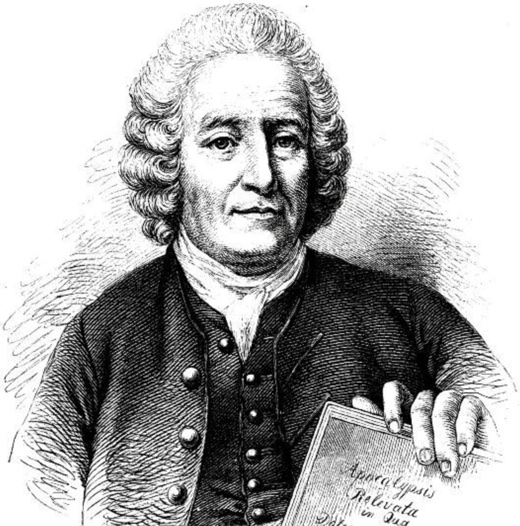
His book Heaven and Hell (1758) is practically a scientific report on the afterlife — based, admittedly, on personal experience. Something important happened at that moment: Swedenborg became the first Western medium of the “modern type.” He conversed not with abstract spirits or gods but with the souls of specific dead people. And his influence proved colossal. William Blake, Honoré de Balzac, Ralph Waldo Emerson, W. B. Yeats, Carl Gustav Jung, Saul Bellow — all drew on Swedenborg. His concept of “correspondences” between the spiritual and material worlds shaped Romanticism and 19th-century American Transcendentalism. Swedenborgian societies appeared in the 1780s, and later the organisations of the Church of the New Jerusalem. It was through Swedenborg that channeling reached the intellectual elite — it ceased to be the province of village healers or temple priestesses and became the subject of serious philosophical reflection.
The Fox sisters and the rise of spiritualism
A century passed, and a new explosion came. 1848, the small town of Hydesville, New York. Two sisters — Margaret and Kate Fox — claimed to communicate with the spirit of a dead man through knocking sounds. It became a genuine sensation, and a wave of spiritualism rolled across America and Europe.
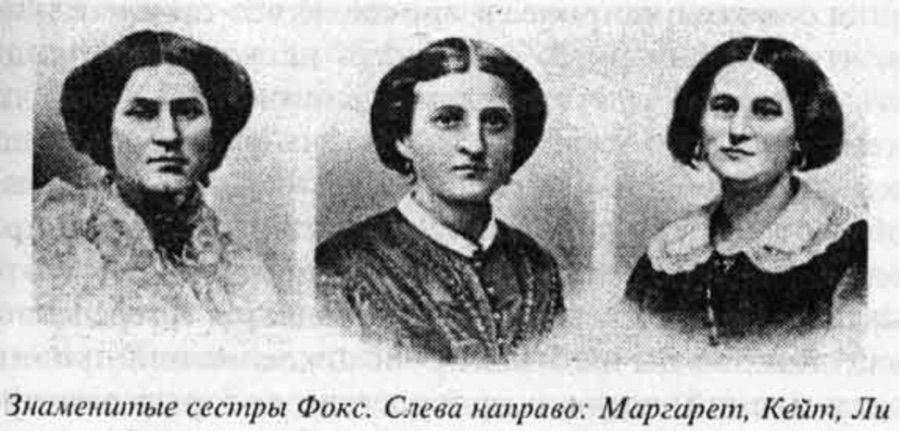
By the end of the 19th century, séances had become a mass movement. Research societies even appeared — for example the Society for Psychical Research in London (1882), where scholars tried to understand the nature of the phenomenon. In that period mediumism firmly took its place in the cultural landscape of the Western world.
Mediumism and the Theosophical Society
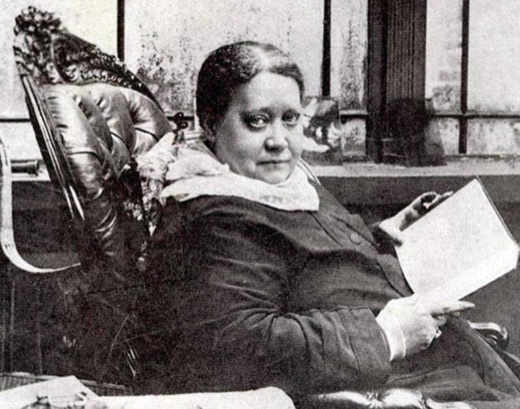
Helena Blavatsky (1831–1891) worked in the 19th century, long before the term “channeling” appeared. She founded the Theosophical Society in 1875, helping to usher in the coming “New Age” era. Blavatsky claimed to receive knowledge from “masters” (or “Mahatmas”) — spiritual beings from higher worlds. She wrote that these entities transmitted wisdom to her through a special “mediumistic” connection. In essence this was already channeling, only in an as-yet unformed shape and without the term. Blavatsky produced texts that were later edited, and she considered herself an intermediary — yet in the process she was aware of what she was writing.
Jane Roberts and the birth of “channeling”
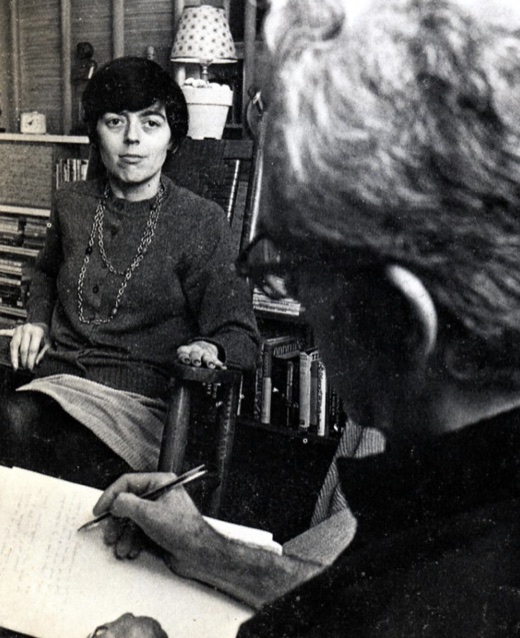
The term itself appeared only in the 1960s–70s, on the wave of the counterculture and the New Age movement. The key figure in this story was the writer Jane Roberts. From 1963 she experimented with sessions of communication with an entity called “Seth.” Jane would enter an unconscious trance, and messages were transmitted through her as through a channel. She herself remembered nothing — everything survived thanks to the notes of her husband, who recorded the sessions. The Seth Material came out in the early 1970s and became a bestseller. This series shaped the image of the “person-as-channel” — a conduit of wisdom from other dimensions. Around 1970–1975 the word “channeling” took root in the culture of self-knowledge, and by the end of the 20th century a real vogue for channeling had begun.
The shiftWhat is changing right now
We used to say: “I received an instruction from subtle beings,” “The spirit told me to pass this on,” “Higher powers revealed the truth to me.” At the centre stood an external source — some entity that knows more and dictates the rules. Today it is beginning to sound different: “I entered a state of flow,” “I received an intuitive insight,” “I tuned in to a deeper level of perception,” “I had a transpersonal experience.” The emphasis is noticeably shifting — from the passive receiving of commands to active perception. Even when a person allows for contact with something external, they acknowledge: the information passes through the filter of my own consciousness.
EvidenceBut what about proof?
We are inside an era in which people want not merely to believe, and not even to entertain themselves with mystery, but to understand.
The result matters more than the mysticism
Take meditation, for example. Just 30 years ago it was “Eastern exotica.” Yet today it is practised by Google executives, taught in schools, and neuroscientists publish hundreds of studies on its effect on the brain. What changed? Meditation stopped being seen only as “a path to enlightenment” and began to be used as a practical tool — for reducing stress, improving focus and emotional balance.

People are less and less interested in “which instruction I received from a spirit.” We care more about whether we have become calmer, whether new ideas have appeared, whether it has helped solve a problem. In a broad sense, modern channeling is when a person perceives information by drawing on alternative methods (hypnosis, tarot, natal charts, meditation and other techniques of working with the unconscious) to improve their quality of life. A transformation has taken place — from divine revelation into a psychotechnique. Into a tool of self-help and personal growth.
ScienceScience asks questions
The very idea that consciousness extends beyond the body has been receiving growing scientific attention since the middle of the 20th century.
The holographic brain
Karl Pribram (1919–2015), an American neuroscientist and neuropsychiatrist, was among the first to propose the idea of the holographic brain. He was a professor of psychology and psychiatry at Yale for ten years and at Stanford for thirty. In Brain and Perception: Holonomy and Structure in Figural Processing (1991), Pribram concludes that the brain encodes information not in separate neurons but in the form of interference patterns, analogous to a hologram.
On this model, if consciousness really functions holographically, then perception may “resonate” with information existing beyond individual experience. And that is one possible explanation of the mechanism of channeling — the reception of information from a wider matrix of consciousness.
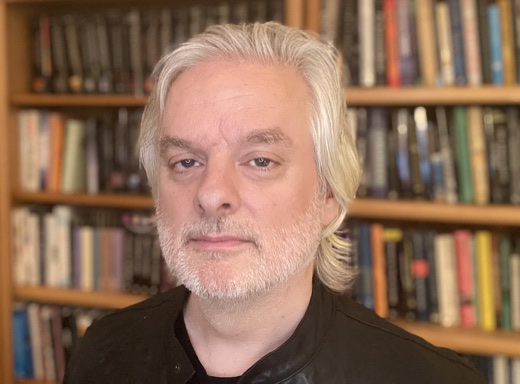
Panpsychism
David Chalmers (b. 1966), a philosopher of mind. In The Conscious Mind (1996) he formulated “the hard problem of consciousness”: how does subjective experience arise from physical matter? Chalmers advanced the ideas of panpsychism and panprotopsychism. According to them, consciousness may be a fundamental property of the Universe — like space, time or energy. We can describe perfectly well how the brain processes information, how it reacts, what processes occur — but why subjective experience arises alongside these processes remains a mystery. And that casts doubt on the idea that consciousness simply “sits” inside physical processes.
Within this philosophy the brain is not a source but a receiver of consciousness. It follows that channeling would be a process of tuning the individual mind to non-local (matter-independent) levels of the conscious field.
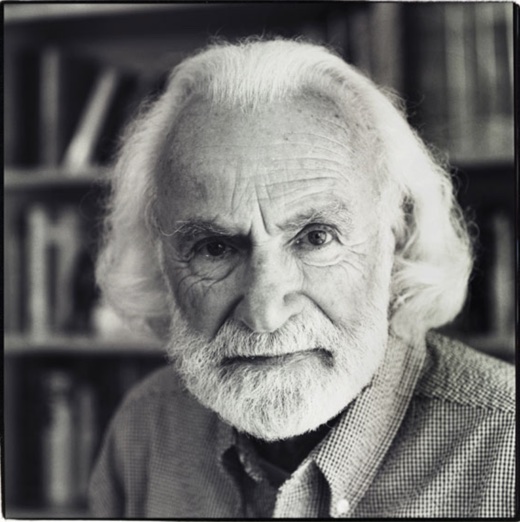
The memory of nature
Rupert Sheldrake (b. 1942), a British biologist. In The Presence of the Past (1988) he developed the theory of morphic fields — immaterial structures through which living systems store and transmit information about form and behaviour.
Sheldrake develops the concept of morphic resonance — the idea that everything in nature is influenced by a “memory of form.” Nature is made not of lifeless matter but of systems that remember the past and reproduce habitual patterns of behaviour — “morphic fields.” Habits, structures and regularities (crystal forms, biological species, animal instincts, even social patterns) are not random or purely mechanical, but stable memory-traces in the fabric of reality itself. Originally reality was flexible, alive, creative. But as processes and structures repeat, they become fixed, inert, “solid” — like human habits that are hard to change. This is how matter forms: a settled, habitual way for mind to exist. In other words, matter is consciousness frozen into habit. In this model, channeling is precisely a connection to morphic fields — to the stores of the collective experience of humanity or other forms of life.
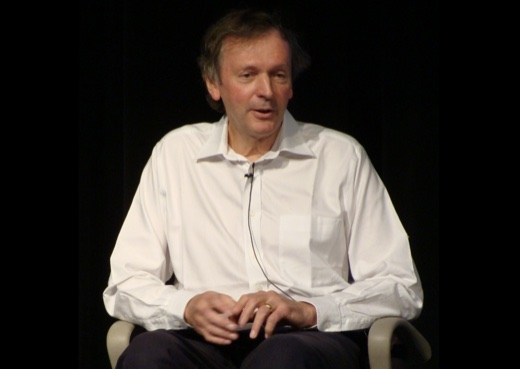
Quantum consciousness
Dean Radin (b. 1952), an American psychologist and chief scientist at the Institute of Noetic Sciences (IONS), has devoted many years to studying psi phenomena: extrasensory perception, precognition, non-local correlations of consciousness. In The Conscious Universe (1997), Entangled Minds (2006) and Supernormal (2013), Radin presents data on the possibility of information exchange between minds at a distance. He discusses the hypothesis that atoms and elementary particles may possess elementary quantum forms of consciousness — and so consciousness may be a universal property of matter.
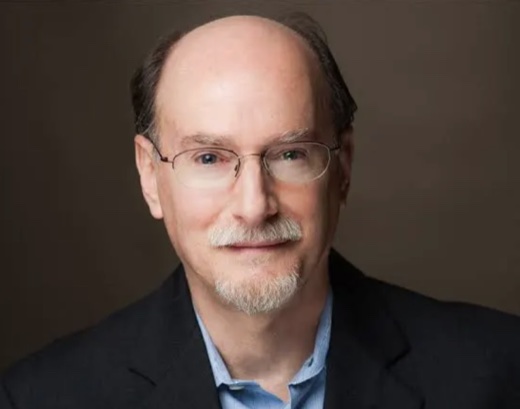
In this paradigm the measurable physical fields surrounding the brain are not strictly local and may be connected with fields beyond the body. This opens a way to understand how telepathy and other psi phenomena arise. Given that channeling is very close to such “extrasensory perception,” in this model it becomes a natural capacity of consciousness to resonate with non-local quantum processes. Serious physicists, too, have turned to the idea of a quantum nature of consciousness.
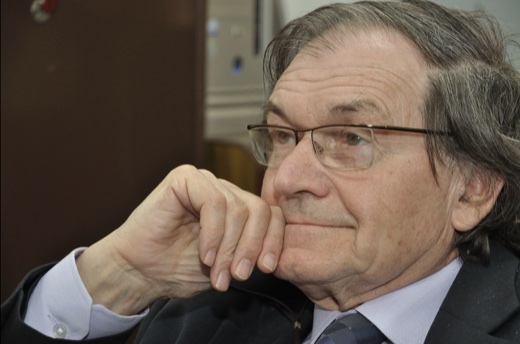
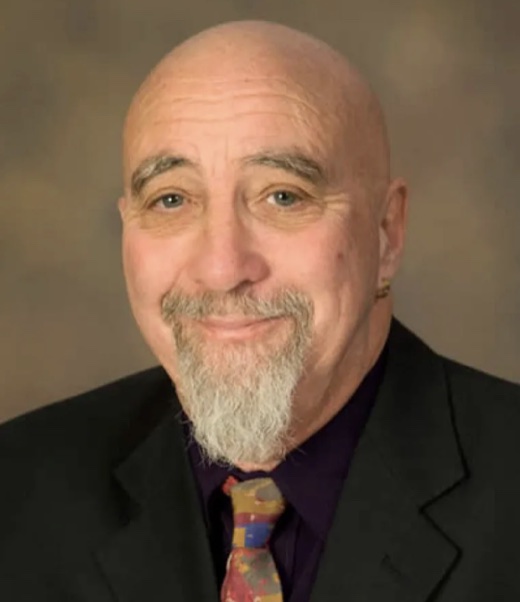
Sir Roger Penrose (Nobel laureate in physics, 2020) and Stuart Hameroff (professor of anaesthesiology, University of Arizona) developed the theory of Orchestrated Objective Reduction (Orch-OR; Hameroff & Penrose, 2014). Its essence: consciousness arises from quantum processes in the microtubules of neurons, capable of synchronously changing (reducing) quantum states. If these processes are quantum-coherent, consciousness may begin to exist beyond specific neurons and possess non-locality — partly reaching beyond the brain. The central idea of Penrose and Hameroff: the quantum processes from which consciousness is born occur not merely in the brain, but at the level of the very fabric of space-time. From this point of view channeling is not supernatural but a quantum phenomenon — a particular attunement of the neural structure.
Clinical death
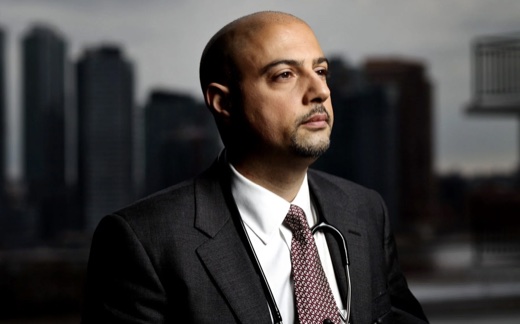
Dr Sam Parnia, an intensive-care physician, professor of medicine and director of resuscitation research at NYU Langone Medical Center, ran the large-scale AWARE study — AWAreness during REsuscitation (2014). It involved 2,060 patients from 15 hospitals. About 2% reported that they retained awareness of events at the moment of clinical death, when the brain showed no activity. Patients described events that took place during their “death,” which hospital staff then confirmed.
Of course, these results cannot scientifically prove the existence of a soul. But they certainly cast doubt on the idea that consciousness disappears completely when brain activity stops. It seems it may somehow persist beyond a working brain.
Awakening in space
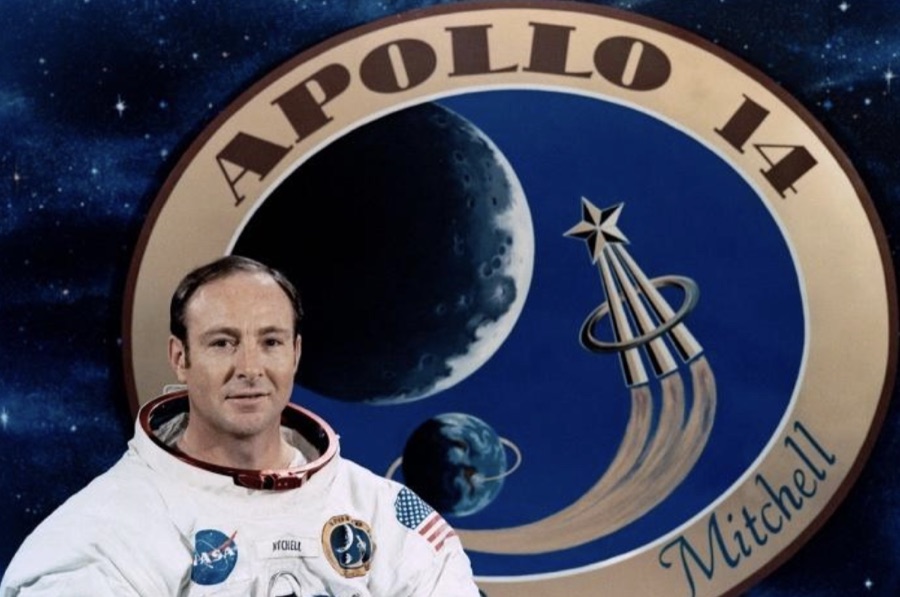
Much of the groundwork for this research was laid by the Institute of Noetic Sciences (IONS), which studies consciousness and intuition. Noetic comes from the Greek for “apprehension by the mind,” “inner knowing.” It was founded in 1973 by the astronaut Edgar Mitchell (Apollo 14, NASA). After his Moon flight in 1971, Mitchell experienced a profound sense of unity with all that exists. On his return he devoted the rest of his life to studying the non-local aspects of consciousness. Under his leadership, and with Dean Radin’s participation, IONS publishes peer-reviewed research: the link between consciousness and matter, intuition, the anticipation of events, collective effects of attention. In March 2020, a qualitative content analysis of channeling sessions was published — researchers categorised and thematically analysed information obtained in a trance state. In 2022 a study was conducted to assess the potential usefulness of channeled information for ten scientific questions. Although the institute’s methods are debated and criticised, the fact that its work is regularly published and discussed in the scientific community shows that interest in non-traditional phenomena is growing.
ConvergenceWhat unites all these approaches?
From Pribram’s holographic theory and Chalmers’s panpsychism to the quantum models of Penrose and Hameroff, Sheldrake’s morphic fields and Radin’s experiments — all converge on one point: consciousness may not be generated by the brain alone. The brain may be as much a receiver as a source — and perception may reach information that lies beyond the boundaries of the individual body.
Our researchWhat the EEG shows
Let us touch on the research we, the KADI team, are conducting now (the results are still being prepared for publication). We measure brain activity (EEG) with the Muse 2 device in practitioners of Transgressive Focusing across different states: focusing on the levels of one’s own consciousness — self-observation, working with one’s own thoughts and feelings (the states we call “Mind,” “Higher Self,” “Soul”). We describe these findings in detail in a separate piece — “The brain quietens while the heart wakes up.”
Co-authorshipConsciousness is not a passive receiver
Even if guides, teachers, angels or an information field exist — we do not receive “clean text” from them. Whatever the source, information passes through our own perception, our language, our images and our history. Which makes us not passive recipients but co-authors of the experience.
EvolutionFrom deities to psychotechnique
The transformation of channeling reflects a broader evolution in how human beings understand themselves. In antiquity it was divine revelation, deciding the fate of people and even nations. In the 19th century Swedenborg gave the phenomenon a more personal, psychological character. In the 20th century channeling became an object of scientific study. In the 21st it became a tool of personal development and psychological work. This transformation is in step with the general movement of Western culture — from external authorities (gods, church, tradition) toward inner experience and the individual search for meaning. Channeling has turned from a way of communicating with external entities into a method of accessing the deep layers of one’s own psyche.
LegacyThe legacy of “channeling”
The influence of this phenomenon on culture is enormous.
- Art and literature: from the visionary poetry of William Blake to the Surrealists of the 20th century, many artists used techniques close to channeling to access creative inspiration.
- Philosophy and psychology: Jung’s ideas about the collective unconscious, archetypes, transpersonal psychology — all have roots in practices linked to channeling.
- Spiritual movements: Blavatsky’s Theosophy (1875), the New Age movement, modern spiritual practices — all draw to some degree on the concepts of channeling.
- The science of consciousness: modern research into altered states, meditation and trance continues the tradition of studying phenomena once considered purely mystical.
What nextWhat comes next?
Today we find ourselves at a moment of transition. In 10–20 years the word “channeling” may sound archaic — as “mesmerism” or “animal magnetism” (old terms for hypnosis) sound now. But the phenomenon itself will not disappear. It will become part of neuroscience (as a particular brain state), of psychology (as a technique for accessing the unconscious and creativity), of the philosophy of mind (as a question about the boundaries of the “self”), and of practical spirituality (as a tool of self-knowledge).
And here is what is remarkable: abandoning the naïve model of “the spirit dictates” does not mean a hard rejection of the immaterial. Perhaps we are moving toward a more complex and interesting picture of the world. Consciousness may be more than the brain. But even if so, it still works through us, through our unique filters of perception — making us not passive recipients but co-creators of experience.
MaturityMaturity
If you practise contact with “something larger” — guides, a higher Self, the collective unconscious, an information field — there is no need to abandon that experience. But it is worth:
- speaking about it honestly (this is my interpretation, not absolute truth);
- testing it (especially if it affects important decisions);
- taking responsibility (even if “the guide said so,” I am the one deciding);
- staying curious (how does it work? what does science say?).
This is a remarkable time: science is beginning to take an interest in questions that once belonged only to mystics. Neurophysiologists study meditation. Physicists discuss quantum consciousness. Doctors document near-death experiences. We no longer have to choose between “science” and “spirituality” — we are moving toward their meeting, on a new and more mature level. The word “channeling” is becoming an old label on a door. Behind the door lies the mystery of consciousness, which our society is only beginning to explore. From ancient oracles, through scientific insight, to modern practices of self-knowledge — channeling remains a phenomenon that keeps transforming alongside human culture. And in this sense it has influenced not only the history of society, but our understanding of our own human possibilities.
Useful sources
Hameroff & Penrose (2014) — Consciousness in the universe: A review of the ‘Orch OR’ theory. Physics of Life Reviews, 11(1), 39–78. doi:10.1016/j.plrev.2013.08.002
Parnia et al. (2014) — AWARE—AWAreness during REsuscitation—A prospective study. Resuscitation, 85(12), 1799–1805. doi:10.1016/j.resuscitation.2014.09.004 · AWARE II (2023), Resuscitation, 191, 109903.
Carhart-Harris & Friston (2019) — REBUS and the anarchic brain. Pharmacological Reviews, 71(3), 316–344. doi:10.1124/pr.118.017160
Emanuel Swedenborg — Heaven and Hell (1758).
Jane Roberts — The Seth Material (1970); Seth Speaks (1972). Prentice-Hall.
Helena Blavatsky — Theosophical Society (founded 1875).
The Fox sisters and spiritualism (1848).
Karl Pribram (1991) — Brain and Perception: Holonomy and Structure in Figural Processing. Lawrence Erlbaum.
David Chalmers (1996) — The Conscious Mind. Oxford University Press.
Rupert Sheldrake (1988) — The Presence of the Past: Morphic Resonance and the Habits of Nature. Times Books.
Dean Radin — The Conscious Universe (1997); Entangled Minds (2006); Supernormal (2013).
Institute of Noetic Sciences (IONS) — founded 1973 by Edgar Mitchell. noetic.org
Additional institutions: Division of Perceptual Studies (University of Virginia); Center for Consciousness Studies (University of Arizona). Links verified October 2025.